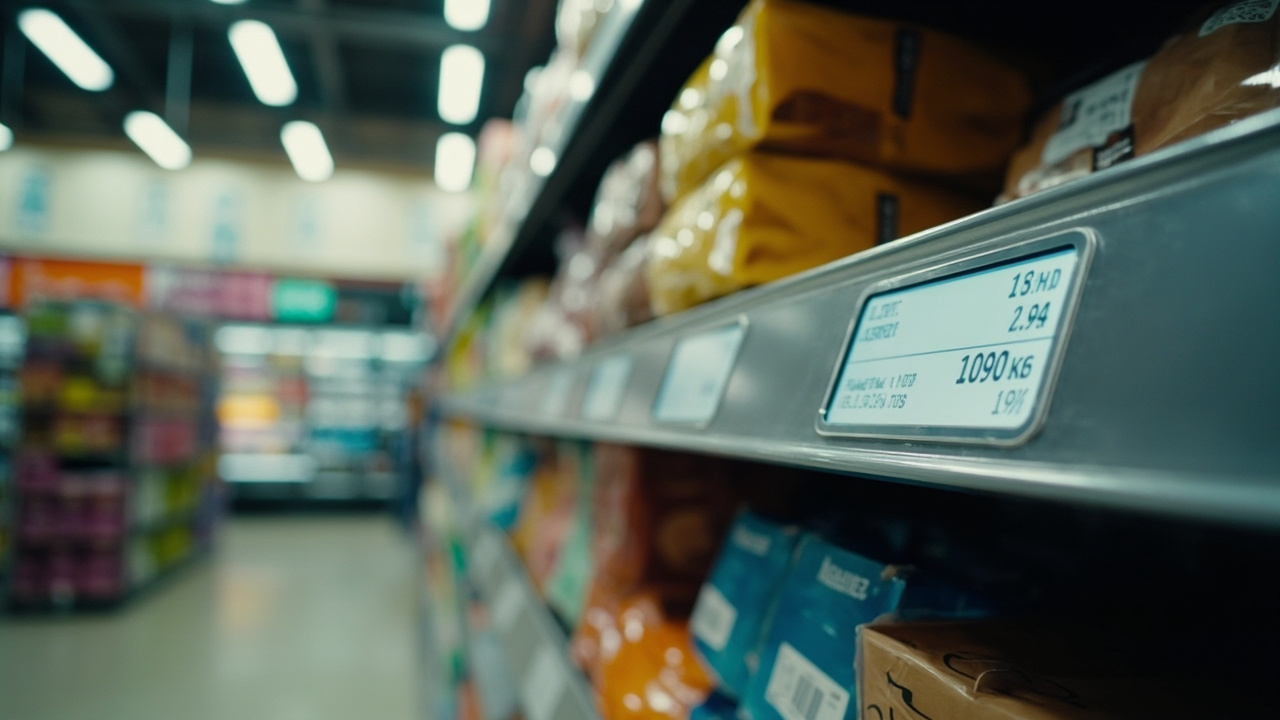

The retailer is deploying electronic shelf labels throughout its British outlets.
The major supermarket chain intends to replace conventional paper price tags with digital screens, with initial implementation at four sites—one convenience store and three larger locations.
The initiative will ultimately extend to approximately 3,000 shops across the country during the next two years.
The digital labels will show prices electronically and can be refreshed immediately through the company’s central systems, guaranteeing that shelf prices always align with checkout charges.
Kevin Tindall, Tesco’s UK operations managing director, explained that the innovation would modernise retail environments while enabling staff to dedicate more attention to customer service.
The company has collaborated with Chinese technology firm Hanshow for the deployment, following positive trials at its Royston and St Neots branches.
Hanshow characterised the deployment as a significant advancement in retail digitisation.
The firm stated its pride in collaborating with Tesco on implementing electronic shelf labels across the chain’s larger stores and convenience outlets in Britain.
The initiative will help streamline store operations for workers, allow them to dedicate more time to customer service, and support Tesco’s environmental goals by substituting paper labels with digital systems.
Such digital labels are becoming prevalent throughout the retail industry as stores seek to modernise and decrease paper waste to lessen their environmental footprint.
The labels receive modifications remotely, enabling instantaneous price alterations throughout the whole shop.
This maintains alignment between shelf prices and till prices, reducing shopper confusion and related grievances.
Morrisons commenced testing the system last year, with other leading retailers including Lidl, Co-op, Waitrose, Asda, and Sainsbury’s subsequently adopting similar approaches.
Tesco anticipates the system will substantially cut paper usage in its outlets, supporting its environmental commitments.
By removing the requirement for employees to manually swap out paper labels, the approach should also boost productivity and allow workers to concentrate on serving shoppers.
The complete implementation is anticipated to finish within two years assuming everything proceeds as expected.