
London Textile Month is coming back to the Museum of the Home this September, exploring how textiles have shaped domestic life through history and continue to do so today.
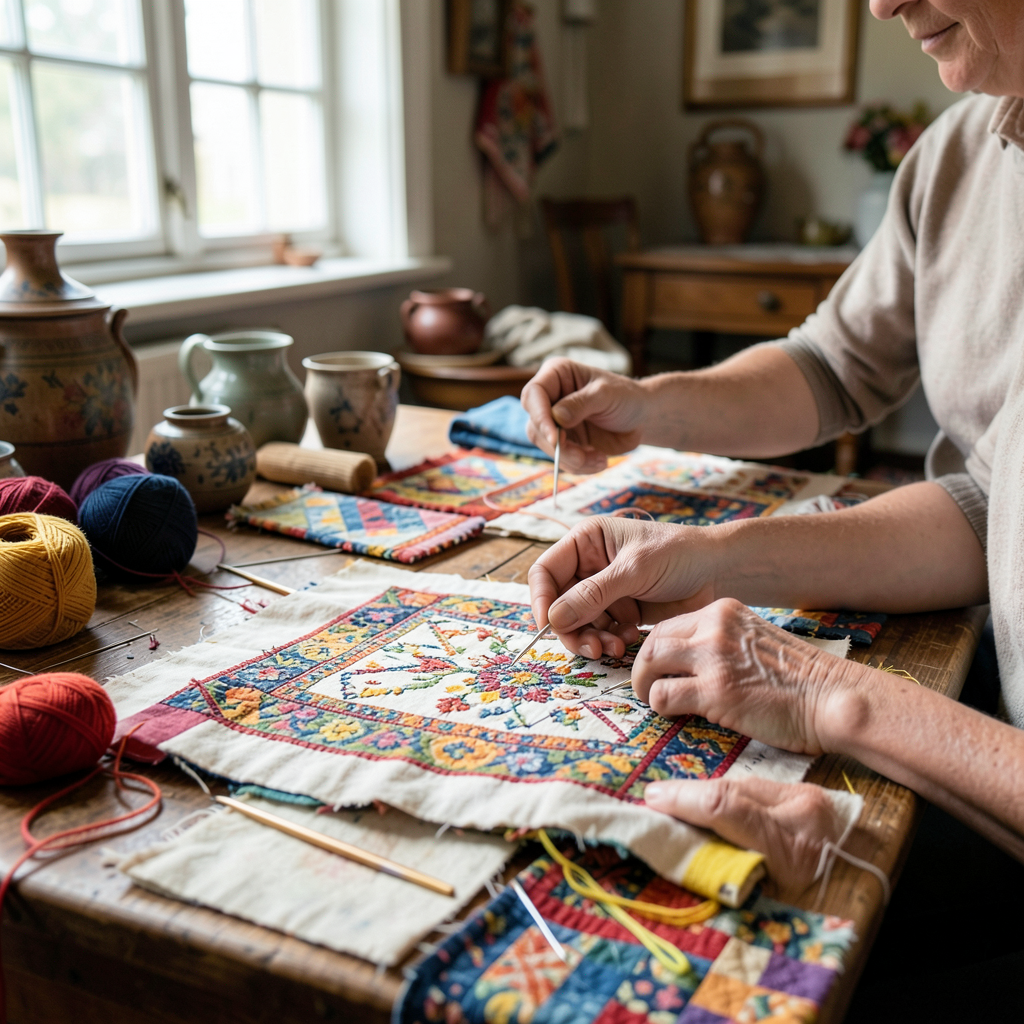
The month-long workshop schedule covers everything from hand-crafted doll creation and Palestinian Tatreez embroidery to Victorian patchwork quilting and protest banner production, providing compelling perspectives on the practical, symbolic and cultural significance of fabrics in the home.
British households in earlier centuries depended heavily on textiles for insulation, comfort and everyday use.
The Rooms Through Time exhibition includes A Hall from 1630, featuring woven rush matting on the floor – a standard floor covering and insulation material found in middle-class London residences of that era.
Moving forward through the gallery to A Townhouse from 1878, visitors can observe how the Industrial Revolution brought a flood of affordably manufactured textiles, many imported or sourced from colonised territories.
Throughout September, the narratives surrounding textiles come alive via the Museum’s holdings; complimentary Object Encounter sessions invite visitors to examine textile traditions up close, while the Textiles Through Time guided tours chart the impact of textiles from the 1600s through to contemporary times.
Textile manufacturing in Britain originated as a domestic enterprise, beginning as a cottage industry where families would collaborate on production. It was typical for cloth to be produced within households with tasks distributed among family members: women and youngsters would prepare the fibre and spin it into yarn, which the men then wove into fabric. This arrangement gave rise to a distinctive style of folk weaving music.
On Saturday the 26th of September, these musical traditions will be explored through Rhythms of Loom: Weaving Songs, a historical discussion led by researcher Vanessa Houlder, alongside loomeweight II, a distinctive performance that intertwines memory and community, featuring two vocalists performing on a loom.
Situated in Hoxton, the Museum cannot examine textiles without acknowledging the East End Rag Trade. The clothing manufacturing sector has provided employment for local residents for more than two and a half centuries. During the late 1600s, the silk-weaving knowledge brought by Huguenot migrants who made their home in Spitalfields dramatically reshaped the trade. Woven Lives in Spitalfields: Christopher Farr x Chris Dyson, a new installation launching on Tuesday the 22nd of September in the Museum’s restored 1690s period room, pays tribute to this period. On Wednesday the 30th of September, visitors can join Christopher Farr and Chris Dyson for a discussion about the neighbourhood’s extensive textile history.
For the complete London Textile Month schedule, visit museumofthehome.org.uk.