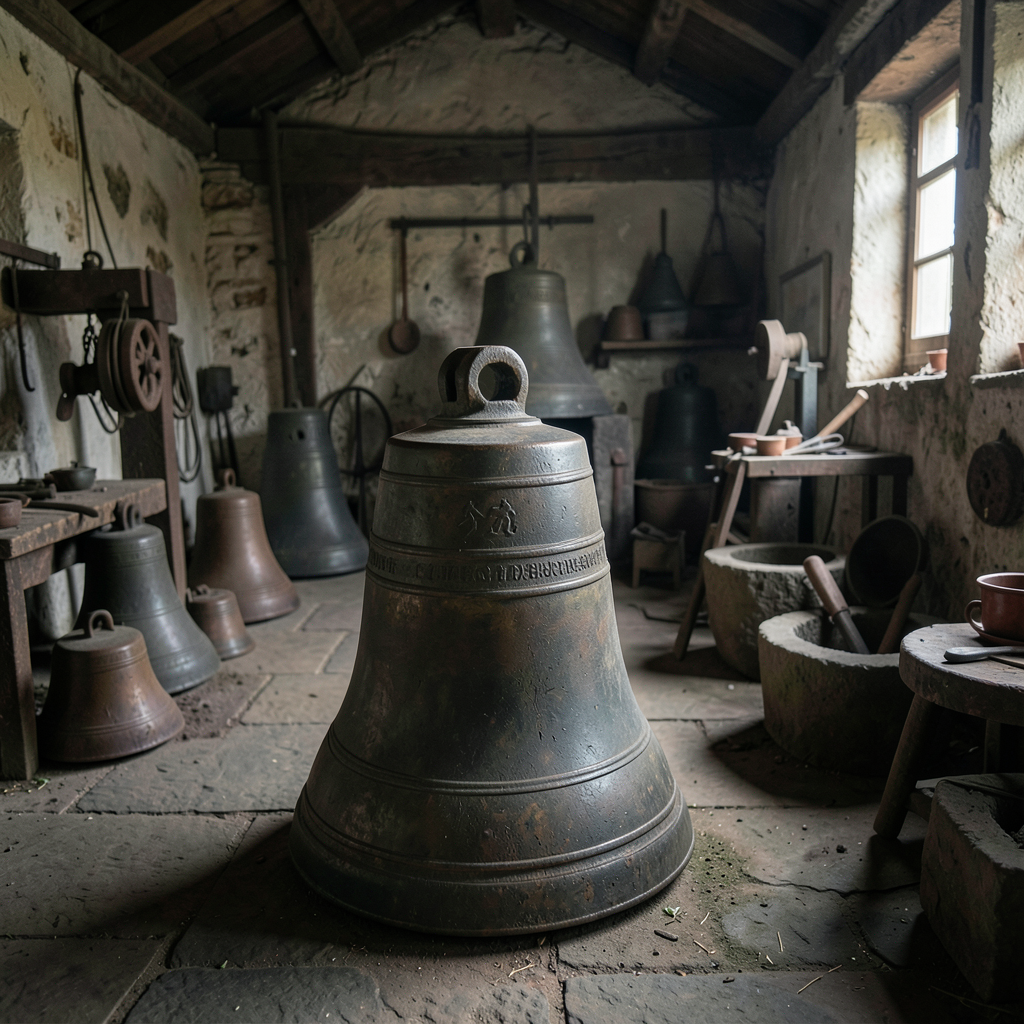

The Whitechapel Bell Foundry produced two of the world’s most renowned bells, and both famously bear significant fractures.
Philadelphia’s celebrated Liberty Bell draws millions of annual visitors as an emblem of American independence, yet it fractured during its inaugural sounding and has remained silent ever since.
Meanwhile, Big Ben’s unmistakable chime results from a substantial fissure running through the instrument’s side.
The historic foundry ceased operations in 2017, concluding nearly four and a half centuries of continuous production.
As Britain’s longest-running manufacturing enterprise, it shut its doors that June, leaving the future of its Grade II* listed premises unresolved.
The company first established itself in 1570 at Essex Court within the City of London.
In 1716, master founder Richard Phelps produced the cathedral clock bell for St Paul’s, known as Great Tom.
By the time of its closure, the foundry had occupied its Whitechapel Road location for a quarter of a millennium.
The structure originally served as a coaching establishment named The Artichoke before suffering damage during the Great Fire of London and closing in 1738.
Upon taking residence, the foundry received an order in 1751 for an instrument destined for Pennsylvania’s State House.
The shipment arrived in America the following year but sustained damage during transit and developed a crack.
Artisans remoulded it on two separate occasions before installation.
The bell eventually occupied the tower of the State House where American founding fathers drafted the Declaration of Independence in 1776.
Abolitionist movements subsequently embraced the bell’s inscription as their emblem, drawing from Leviticus 25:10, which includes the phrase calling for liberty to be proclaimed throughout all the land unto all the inhabitants thereof.
The passage resonated with suffragettes and civil rights advocates alike.
In 1846, a catastrophic fracture appeared while the bell was sounded for George Washington’s birthday commemoration, rendering it permanently unsound.
The foundry’s second landmark undertaking involved creating the Great Bell of Westminster, universally known as Big Ben.
The original instrument originated in Stockton-on-Tees in 1856 and arrived in the capital before the tower’s completion.
Testers positioned it on a provisional framework within New Palace Yard, where an overly massive striker generated a significant fracture.
Workers dismantled the defective piece and conveyed it to Whitechapel for remelting.
The replacement, weighing 13.5 tonnes, was transported from the foundry through London Bridge aboard a carriage drawn by sixteen caparisoned white horses, drawing spectators along the route.
This second casting also fractured within two months of initial use.
Engineers responded in 1859 by rotating the instrument a quarter-turn so the striker contacted an undamaged section, then cutting a small square groove around the fissure to halt further propagation.
This modification produced Big Ben’s characteristic flat timbre.
Across generations, the foundry supplied instruments to destinations including Australia, Canada, and India.
Business intensified significantly following the Second World War as replacements were needed for those destroyed during aerial bombardment.
However, orders for substantial ecclesiastical instruments dwindled, prompting the transfer of production rights to other enterprises after the facility’s shutdown.
Proposals emerged to convert the premises into a luxury hotel, though planning consent was eventually granted, the scheme faltered and never progressed.