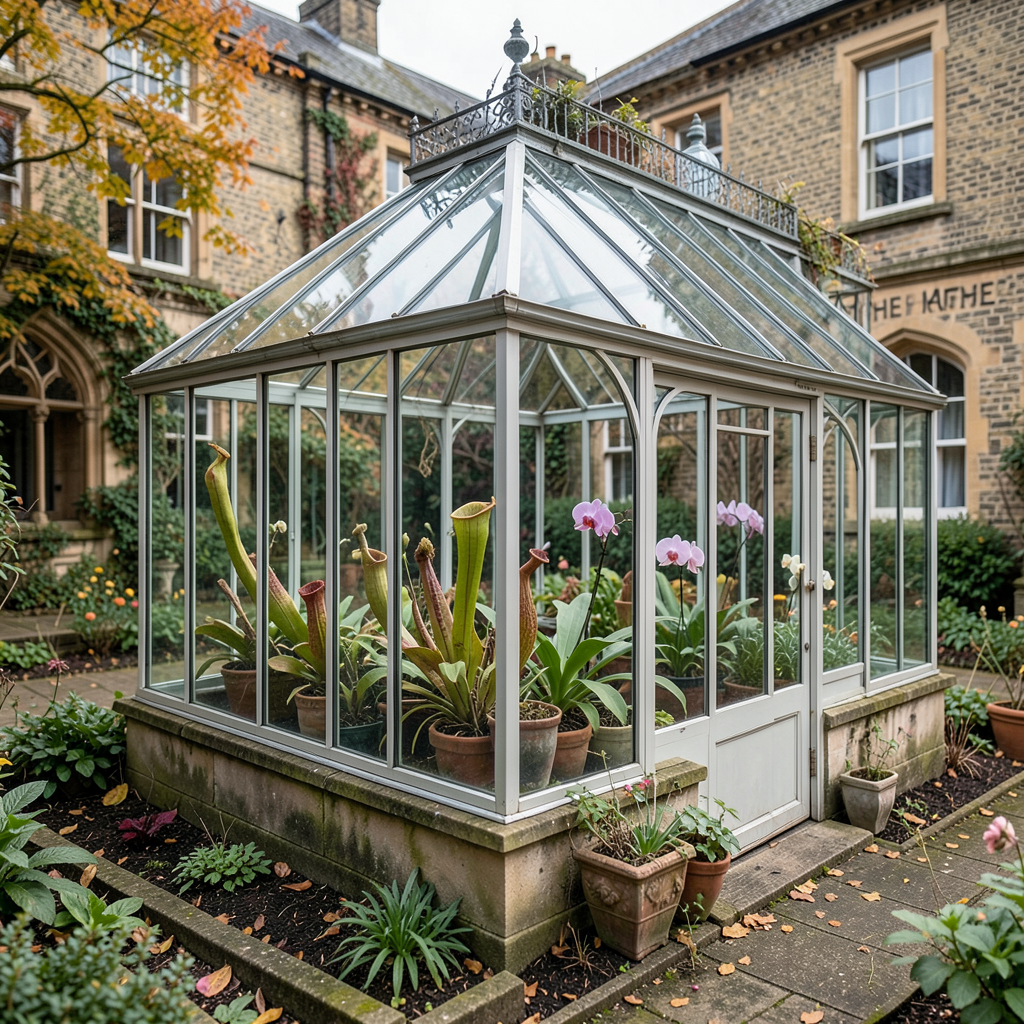

The Museum of the Home has opened a Victorian-style glasshouse in its autumn gardens, showcasing carnivorous specimens and one of the world’s smallest orchids alongside information panels detailing each species.
The structure sits behind the museum’s late nineteenth-century Bold and Colourful gardens, which form part of the Gardens Through Time exhibit illustrating how urban horticulture evolved through centuries of social transformation.
By the early 1900s, the surrounding Shoreditch area had become heavily built up with industrial premises.
Records indicate that what are now the museum’s Kingsland Road Gardens represented fourteen percent of publicly accessible green space in the vicinity at that period, prompting local residents to campaign for its protection against further construction.
Contemporary green areas adjacent to the museum have expanded considerably since then.
However, like the museum’s own grounds, many of these spaces suffered severely during the prolonged heatwave and drought conditions experienced across the capital during the summer months.
Scientific consensus holds that such extreme weather phenomena are growing more frequent as global temperatures rise.
Zahrah Vawda, speaking on behalf of the museum’s horticultural staff, confirmed that the gardening team has this year adopted a zero-water methodology designed to transform the grounds into climate-resistant environments capable of sustaining diverse flora and fauna.
Under this approach, the use of mains water has been entirely discontinued for exterior planting, with the collection of rainwater now providing the sole source of irrigation.
The summer’s testing conditions revealed mixed outcomes among different species.
Roses, dahlias, sunflowers and cherry tomatoes demonstrated notable resilience, persisting through the drought to continue blooming and fruiting while supporting various pollinating insects throughout the season.
Plants situated in containers proved considerably more vulnerable, showing wilting, browning and desiccation.
These specimens are being permitted to complete their natural cycle, creating space for fresh seasonal planting as the team introduces varieties better equipped to endure future adverse weather patterns.
The Victorian-style glasshouse welcomes visitors between ten in the morning and three in the afternoon from Tuesday through to Friday within the museum’s Gardens Through Time section.