
Spencer Perceval remains the sole holder of the office of British prime minister to have been murdered in office.
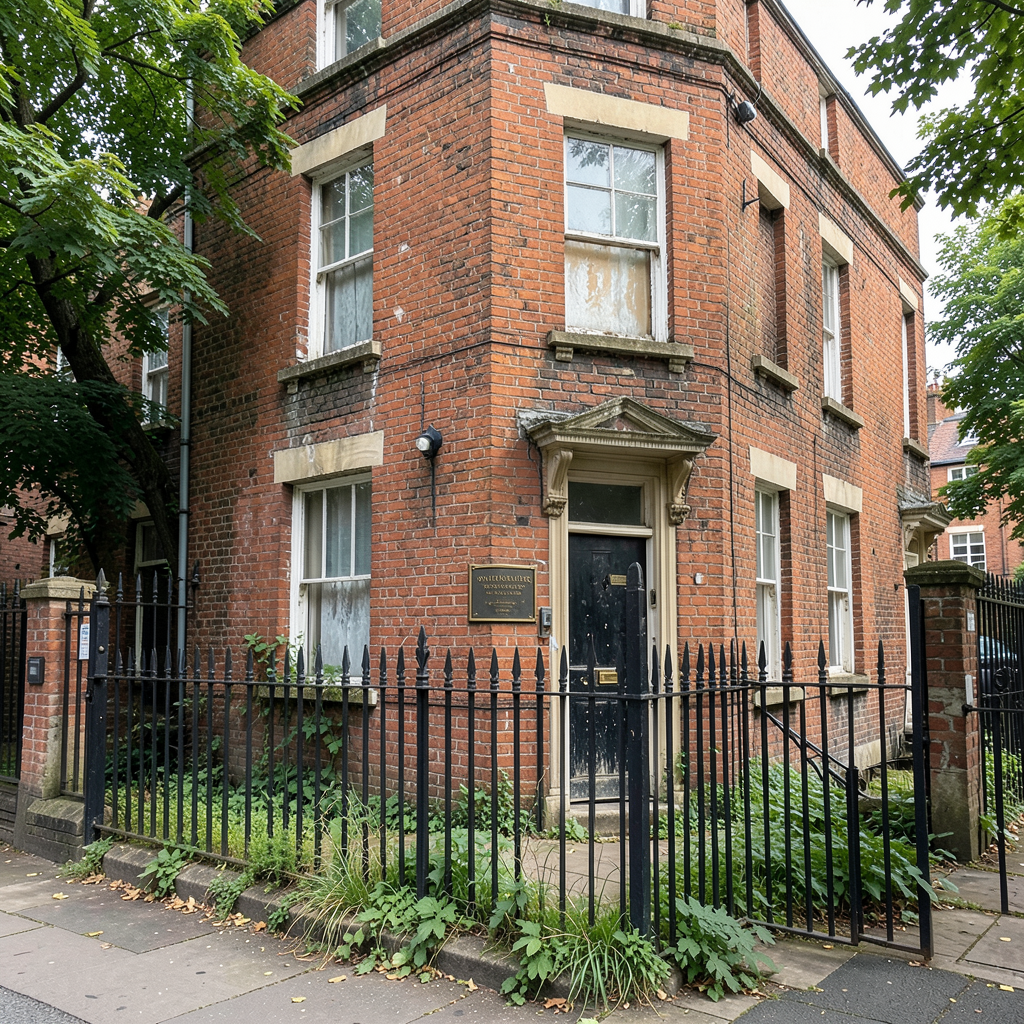
The property that once served as his residence stands today in a state of abandonment on one of central London’s traditional squares, sealed behind security gates.
Perceval occupied Lindsey House at 59 Lincolns Inn Fields from July 1792 while establishing himself in the legal profession.
His occupation subsequently expanded to encompass the adjacent property at number 60.
Born into the British nobility in 1762, Perceval entered the world as the younger son of the Earl of Egmont.
Despite enjoying advantageous social connections derived from his aristocratic lineage, his position as the second son from his father’s second marriage meant he did not receive a sufficient inheritance to support himself independently.
With an annual allowance of merely £200, he was compelled to forge his own career path.
Following his education at Harrow School and Trinity College, Cambridge, Perceval pursued legal studies at Lincoln’s Inn and was admitted to the bar in 1786.
He established a successful practice as a barrister, achieving the rank of King’s Counsel in 1796, the same year he entered political life as the parliamentary representative for Northampton.
His political philosophy aligned with that of William Pitt the Younger.
Perceval championed the campaign against Napoleon and advanced rapidly through the governmental hierarchy, serving first as Solicitor General and subsequently as Attorney General for England and Wales.
Following Pitt’s death in January 1806, Perceval served as one of the bearers at his funeral and, despite his own financial constraints, contributed £1,000 toward settling Pitt’s outstanding debts.
In 1807, he assumed the positions of Chancellor of the Exchequer and Leader of the House of Commons.
Two years later, he attained the highest political office in the nation.
Throughout his subsequent three-year tenure as prime minister, Perceval guided Britain through numerous crises.
These included the Napoleonic conflicts in the Iberian Peninsula, the Luddite disturbances, the mental health difficulties experienced by King George III, and significant economic challenges.
When the king’s incapacity became apparent in 1810, Perceval played a central role in addressing the governmental impasse.
The resulting Regency Act established the Prince of Wales as Prince Regent, enabling the continuation of royal government.
Perceval’s religious convictions were characterised by devout evangelical Christianity.
He advocated for the abolition of slavery and an end to the Atlantic slave trade, while maintaining opposition to Catholic emancipation.
While residing with his family in Charlton, Kent, Perceval and his elder brother Charles both became enamoured with two sisters who were also resident there.
Their father, Sir Thomas Wilson, sanctioned the union between Charles and the elder, wealthier sister while objecting to her younger sibling’s attachment to Perceval on grounds of his insufficient wealth and lack of noble status.
The couple departed together without parental consent in August 1790 on the woman’s twenty-first birthday and eventually produced twelve children.
On 11 May 1812, Perceval entered the lobby of the House of Commons where John Bellingham, a merchant rendered insolvent, approached him.
Bellingham produced a hidden pistol from within his coat and discharged it at close range, striking Perceval in the chest.
The prime minister fell immediately and succumbed within moments.
Bellingham, who maintained that the British government had failed to provide compensation following his wrongful imprisonment in Russia, remained seated composedly until authorities took him into custody.
Bellingham faced rapid judicial proceedings, was pronounced guilty, and suffered execution at Newgate Prison seven days following the killing.
Perceval was interred at St Luke’s Church in Charlton.
The residence he formerly occupied, now held in private ownership, remains vacant and has fallen into a state of disrepair, its windows and doors covered with protective boarding.