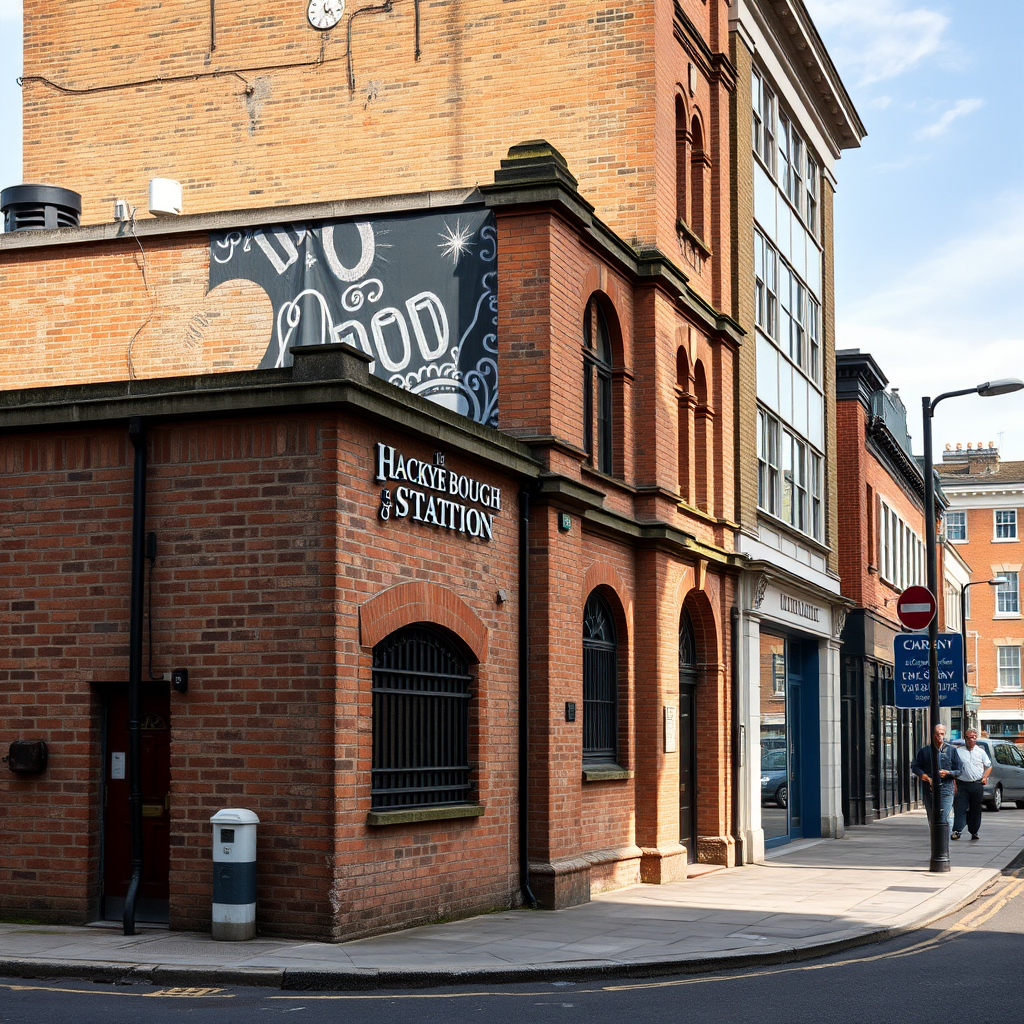

The Hackney Borough Disinfecting Station on Millfields Road in Clapton, Hackney, London has been added to the Victorian Society’s 2026 list of the ten most endangered buildings in the country. Constructed in 1901, this structure represents England’s final remaining purpose-built municipal facility designed specifically for disinfection purposes.
The building, which received its Grade II listing from Historic England, was designed by the architectural firm Gordon and Gunton. During the late Victorian and Edwardian periods, the facility played a crucial role in combating outbreaks of illnesses including smallpox, diphtheria, scarlet fever, and measles, serving as an important component of public health infrastructure.
The Victorian Society’s president, Griff Rhys Jones OBE, commented that while contemporary experiences have provided their own concerns, the Victorian era initiated the nation’s understanding of public health. He emphasized that recent epidemics have demonstrated just how significant and pioneering this approach was, arguing that the structure must be repurposed rather than demolished. If it cannot serve its initial function, it should nonetheless remain standing as a testament to Victorian forward thinking.
The Local Government Act of 1899 empowered Hackney Borough Council to enter residences, remove contaminated belongings, and sanitize them at the central facility on Millfields Road. The complex included a Shelter House providing temporary accommodation for displaced families, along with a caretaker’s lodge adjacent to the primary disinfecting building.
During its first complete year of operation, the facility processed more than 24,000 items for disinfection and sanitized over 2,800 rooms. Although built primarily for practical function, the structure was constructed with attention to detail, featuring Portland stone and ornamental leadwork.
The facility remained a symbol of civic dedication to public health until it ceased operations in 1984. The main structure has stood empty since that time and was officially mothballed in 2020. While basic maintenance has been performed and certain sections of the site continue to be utilized, the primary building appears on Historic England’s Heritage at Risk Register and currently lacks a comprehensive preservation strategy.
James Hughes, the Victorian Society’s director, stated that this represents an exceptionally rare surviving example of a building type that fundamentally transformed public health in Britain. He noted that Hackney’s disinfecting station illustrates how society responded to health crises and how civic ambition influenced architectural development, emphasizing that a new purpose must be identified to ensure the structure’s future.
The Victorian Society maintains that returning the building to active use offers the most effective path toward its preservation. They suggest that a sensitive sale and repurposing of the site would provide the optimal solution.
The structure’s inclusion in Historic England’s Heritage Investment Prospectus for 2025 has generated fresh optimism regarding its potential restoration.
The disinfecting station secured its position on the Victorian Society’s 2026 Top Ten Endangered Buildings List as the sole surviving example of a once-common but now extinct category of public health facility.
Health records from 1899 indicate that Hackney alone documented 116 deaths attributable to measles, with 115 of those deaths involving children, alongside 252 fatalities from diphtheria. The infant mortality rate at that time reached 165 per 1,000 live births, compared to just four per 1,000 in the present day.
While the Shelter House and caretaker’s lodge continue to function, the main building has remained vacant and vulnerable to additional deterioration.
The Victorian Society contends that preserving and repurposing the structure would acknowledge its historical importance and serve as “a monument to Victorian foresight.”
The organization holds a statutory position in the planning system and receives consultation on all applications involving demolition of listed Victorian and Edwardian buildings. Their advocacy has contributed to protecting historically significant sites including St Pancras Station in London and the Albert Dock in Liverpool.
Through programming, publications, and community engagement, the Victorian Society works to demonstrate the importance of Victorian and Edwardian architecture throughout the United Kingdom.
The organization considers the repurposing of existing historic buildings essential to achieving a sustainable future. Their operations are funded primarily through membership contributions, with additional support provided by expert committees.
Statistics indicate that ninety-nine percent of residents in England and Wales reside within one mile of a listed building.