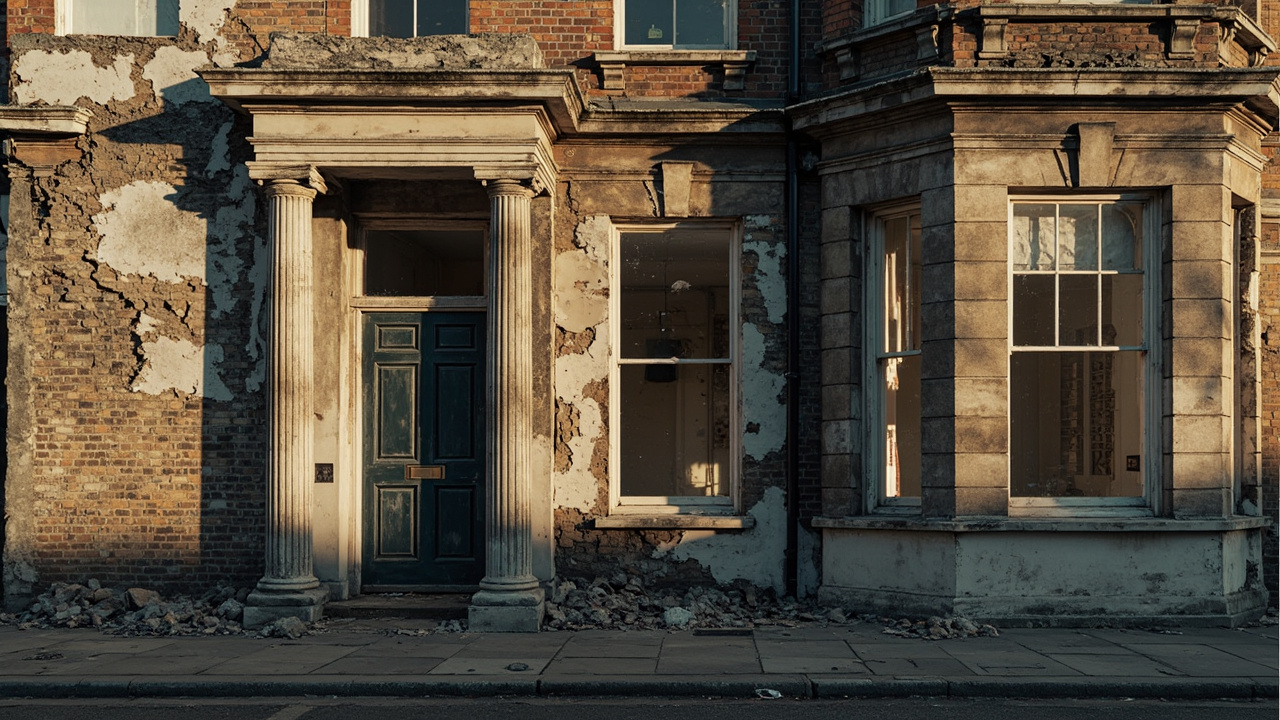

A historic property dating back centuries in Hackney, long threatened with decay, is finally being rescued from the edge of collapse.
The dwelling—referred to by locals simply as the residence on Mare Street—remains on Historic England’s register of endangered structures, though following years of abandonment its original interiors are now receiving careful attention.
Throughout its existence, this Grade II* property has observed three hundred years of transformation in the east London district, accommodating aristocrats, legislators and those in desperate circumstances alike.
Constructed approximately in 1697 as a rural escape for affluent Dutch trader Abraham Dolins, the interiors would originally have featured ornate works by Rembrandt and van Dyck.
The property remained within the Dolins lineage until 1800, when ownership transferred to Thomas Wilson, a Conservative MP representing the City of London who backed the slave trade.
In 1849, the building adopted a more philanthropic role when it received the name of distinguished Quaker and penal reform advocate Elizabeth Fry.
The early Georgian property had previously served as a sanctuary for women leaving prison and a club for manual workers. (Image: Wikimedia Commons)
Fry advocated for improved conditions for female inmates and promoted education to aid their reintegration.
The building became a haven for women emerging from custody, with thousands of women passing through its doors upon completion of brief sentences.
According to visitors during a 2023 Open House event, the property still contains a small supervisor’s cubicle where personnel monitored former inmates in the upper dormitories.
Artist impression of the completed 195 Mare Street, Hackney. (Image: Lynch Architects)
In 1913 the premises changed ownership once more, this occasion as the Lansdowne Liberal and Radical Club, facilitating constituency campaigns, political discussions and gatherings, alongside leisure activities.
By the 1950s it operated under the name New Lansdowne Working Men’s Club—a vibrant focal point for the Hackney community.
Yet this architectural treasure shut its doors in 2004 and fell derelict, sealed behind fencing and occupied by unauthorised settlers before a developer acquired it.
Its steep decline into severe disrepair triggered alarm from heritage organisations including English Heritage, the Hackney Society, and local residents, who initiated a campaign demanding swift intervention to preserve it.
The path toward reviving its former splendour commenced when illegal occupants were removed in 2022.
A local pair succeeded in purchasing it and are presently renovating the labyrinthine cooking areas, expansive panelled entrance halls, and period features throughout.
They aim to safeguard its historical significance while making the grounds and basement accessible as a cultural venue for the neighbourhood, with the upper storeys converted to their private dwelling.
Completion is scheduled for this year and Historic England is expected to delist it from the endangered register as the Mare Street residence once again opens its doors to visitors.