
A musician who has collaborated with the Arctic Monkeys and Florence and the Machine has completed a full record while receiving care for cancer at a London hospital.
James Ford was found to have acute myeloid leukaemia in late December 2023 during a visit to Canterbury.
He subsequently started his chemotherapy regimen at St Bartholomew’s Hospital in the capital, which sits nearer to his residence in Hackney.
During his second cycle of chemotherapy, an overwhelming desire to create took hold.
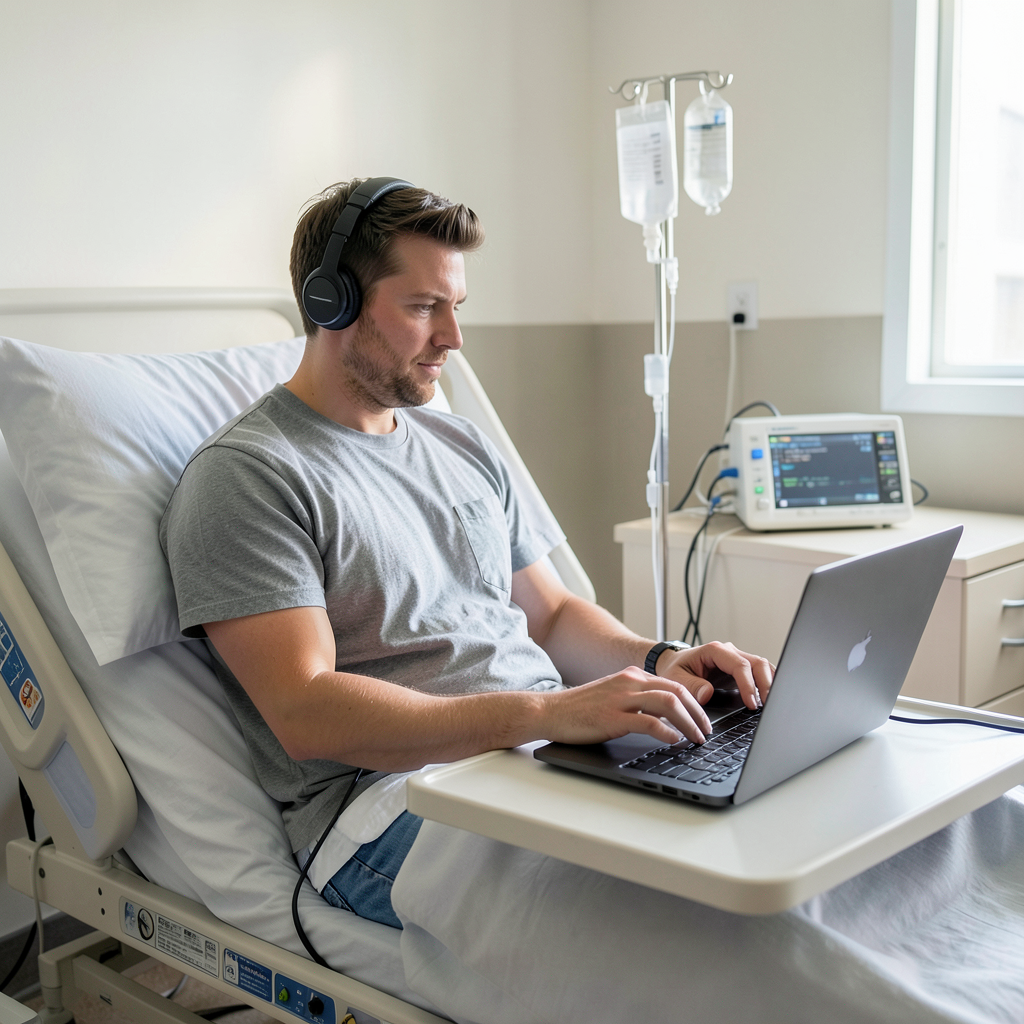
His spouse delivered a laptop and microphone to his bedside, and he proceeded to lay down tracks while confined to his bed. Ward employees soon became aware of the unconventional recording arrangement.
He explained that patients in such circumstances develop close relationships with the personnel, and the staff at this particular hospital had been exceptionally kind in their approach to his care.
Medical workers would occasionally pause to listen as he worked, or slip in to carry out observations such as checking his blood pressure while he had his headphones on.
According to Ford, the creative endeavour offered him something essential to concentrate on during his medical care, helping to steady his frame of mind and direct his attention toward something constructive rather than dwelling on the worrying aspects of his illness.
The experience made a significant impression, and members of the hospital team received acknowledgment in the credits for his latest record, Lost In Another World.
He stated that everyone on the wards exerted a considerable influence on him, from the nursing teams to the cleaning staff and those who deliver morning meals, adding that he could not fault a single person.
He also expressed appreciation for the care provided by the health service, noting that the treatment and assistance he received throughout his time there was of the highest possible standard, and that he felt fortunate to have been treated at this particular facility.
Ford’s experience has received coverage from Rolling Stone, NME, BBC 6 Music, and ITV. His album Lost In Another World became available on August 14.